 Eng
Eng Рус
Рус
It's funny
Happy Easter!

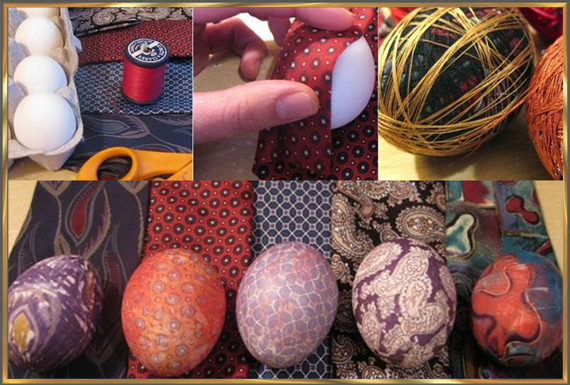
Did you know that we in Russia decorate eggs not only by using colorants and stickers, but with the help of: - onion peel, multi - colored strings, bags of the USSR "maybe bag" (this is a link to our newsletter), applications, nylon stocking, scotch tape, bank rubber bands for money, - laces and silks. Using a toothbrush one can make speckles. Such foodstuffs like turmeric, beets, red and white cabbage give unusual shades. Between Catholics Easter game with eggs are very popular: egg rolling, throwing and even fighting. The egg that doesn’t break is the winner, and it is stored in the house for a year. Losing eggs declared "sinister" and has to be eaten!

In 1985, Carl Faberge commissioned by Emperor Alexander III created his first egg as an Easter surprise for the Empress / Tsar's wife Maria Feodorovna. The two halves of the outer shell fit together in a bayonet-style fitting which opens when twisted to reveal the egg's "surprise", a round "yolk" of gold with a matte finish. This yolk itself opens to reveal a varicolored gold hen set with ruby eyes. The hen is hinged on the tail feathers which allows it to also open up to reveal still two further surprises, a gold and diamond replica of the imperial crown and a tiny ruby pendant that was suspended within it on a chain, both of which are now lost.
The so-called " Jeweled Hen Egg" is made of gold completely coated with opaque white enamel to look like a real egg which opens when twisted to reveal the egg's "surprise", a round "yolk" of gold with a matte finish. This yolk itself opens to reveal a varicolored gold hen set with ruby eyes. The hen is hinged on the tail feathers which allows it to also open up to reveal still two further surprises, a gold and diamond replica of the imperial crown and a tiny ruby pendant that was suspended within it on a chain, both of which are now lost.
The tsarina enjoyed the egg so much that Alexander III quickly placed a standing order with Fabergé to create a new egg for his wife every Easter thereafter, requiring only that each egg be unique and that it contain some kind of "surprise" within it. This particular egg is now a part of the permanent collection of the Fabergé Museum in Saint Petersburg, Russia.
"Faberge Eggs" has become the name of jewelry as well as a synonym for luxury and emblem of the wealth of the imperial house and pre-revolutionary Russia.
Follow us 


Email: office@leader-team.ru
Phone: +7 (812) 438-01-03
26/2 Kuybisheva street, Saint Petersburg, 197046 RUSSIA